Thursday, July 15, 2010

Truly Inclusive Classrooms - July 15th

All students can be included in the classroom. Students with special needs can be part of daily class work, meeting outcomes and needs in their own way. Matching the educational needs of a student with special needs with those of students working on regular curriculum requires creativity and dedication. Teachers may worry about meeting the needs of high needs students but worries are often put to rest when they realize that students can become involved in the work that is already going on in the class. Students may not always be working on the same outcomes as others when taking part in activities but they are learning. Being included is valuable and essential for all students.

An example of a typical classroom activity is "Buddy reading". While other students are practicing oral literacy skills with this very non-judgemental parter, this student who uses a wheelchair b/c of limited physical movement, may be practising his head turning exercises that help to increase mobility when he turns to follow along with his book buddies on either side of him. There are endless examples of adapted activities and alternative outcomes for common classroom activities.


Socializing with other classmates can be a great motivator for students with special needs. They often have to work much harder than others to complete tasks. They need motivation to continue working. Being included in activities with classmates can provide this motivation.

Including students with special needs benefits all students in the classroom. Creativity, patience, awareness and acceptance are some of the qualities naturally promoted when all types of learners are actively included.

With team work, creativity and dedication the challenge of integration can be met in any school, in any classroom.

Video Social Story Sample

David's Morning Routine Preparation Story

When I come to school in the morning I go directly to my locker. I look at my checklist to see what I need for the morning. I hang up my coat and I put my iPod Touch around my neck. I pick up my binder, my pencil case and my water bottle. I lock my locker. I do this quickly and go directly to my homeroom classroom so my teacher will know that I am here. This will make my teacher happy and make me happy too.


See video below:


Tuesday, July 13, 2010

Video "Social Stories"

Social Stories (or preparation stories) can have a great impact on students with autism. Other students who have challenges surrounding memory, routine, socialization and behaviour can also benefit from the explicit, personalized education pieces.

Today's case study - Miranda at Fulton's - proves that adding the video element to a social story can be very effective. Not only can the student hear and read about appropriate actions, the student can see the modeled behaviour in action. Better yet, a student can sometimes be the star of the video, and see him/herself on film successfully completing activities.

Another note: Video Social Stories can be saved and viewed on the student's iPod Touch!! Very accessible!

Sites for Social Stories:
http://www.thegraycenter.org/autismaspergers
http://www.speakingofspeech.com/Social_Skills_Pragmatics.html
http://www.machkovich.com/Cory/AutismRecovery/SocialStories/index.htm#

Sunday, July 11, 2010

APP Detectives for the iPod Touch - Assignment 2

Student Profile:

Student A is a grade 5 student. She has Down Syndrome. She is a persistent communicator using multi-modal communication styles - sign, body language and some words. She learns new routines and transitions well when prepared with prompts and visuals. She has strong self-help skills (dressing, morning routines, tidying up toys) and is self-motivated to be independent. Student A demonstrates pride in independence and learning accomplishments. Student A also has strong receptive language skills and good imitation skills, following direction from both peers and adults. She participates willingly in class and specialist subjects (music and PE) and interacts well with adults and peers in most situations. Student A can become frustrated, particularly concerning communication and turn taking, and can become aggressive. She has limited verbal communication and has difficulty expressing wants and needs. Student A also tires quickly using fine motor skills.

The 3 apps chosen are:

iPlay&Learn

Model Me Going Places

Tap To Talk


APP Description & Match

iPlay & Learn is an interactive application for non-readers. It offers bright, colourful, fun learning and activity zones concentrating on early learning development and pre-reading skills. Vocal guidance and visual cues help student work more independently. Happy face rewards for correct answers motivate student. Collect 5 happy faces and you get a bright start reward. Register your name and pic and the program personalizes to the user.

The program includes:

Identifying shapes, letters, numbers, animals.

Sequencing numbers and letters

Identify odd one out

Free style drawing game

Tracing letters and numbers

Match:

This app will help Student A develop her early literacy and numeracy skills. She is working on recognizing numbers from 1-10 and becoming familiar with reading and writing letters in the alphabet. These games and activities will provide opportunity to practice skills in an engaging, motivating way. Repetition is also important for Student A’s learning and the activities provide opportunity for this. There is also a tracing activity that will help Student A practice writing her letters and numbers with prompts. Student A learns well through imitation so this guided activity is appropriate for her.


Model Me Going Places

User touches forward or backward buttons to view a slideshow of photos and hear the narrator read social stories aloud. Locations include: Hairdresser, Mall, Doctor, Grocery Store, Restaurant etc.

Match:

This app is appropriate for Student A. The Playground slideshow is particularly helpful for Student A who has trouble waiting her turn and keeping her hands to herself when playing with peers. Social stories can help Student A understand what to expect and how to act in different situations. Transitioning skills can be a focus. Using photographs/visuals taps into Student A’s strengths.


Tap To Talk

This app turns the iPod Touch into an AAC. Albums are preloaded with pictures accompanied by phrases (text to speech function) giving a voice to the user. Albums are available to assist in casual conversation, asking questions and voicing wants and needs.

Match:

The preloaded albums are appropriate for Student A’s level. Additional individualized albums can be created however, to meet her specific needs at the Tap To Talk website (www.taptotalk.com). Text is limited on the icons and the clear visuals make reading unnecessary, which is important for Student A. Student A is able to understand the connection between symbols/visuals and words and phrases. After training she could understand the icons and the connected layers. Student A has seen some success meeting her communication outcomes using her communication book. Incorporating an iPod Touch with communication apps such as Tap To Talk will make communication more efficient. The iPod Touch can be carried on a lanyard making it more accessible than her larger communication books. Her fine motor skills are advanced enough to manoeuvre the device easily.

Wednesday, July 7, 2010

iPod Touch + Proloquo2Go


Class July 7th & 8th: Hands on experience with an iPod Touch with the Proloquo2Go application

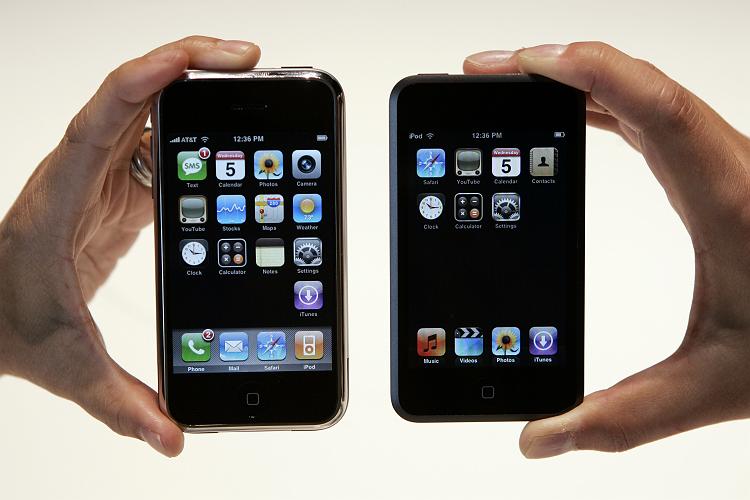
The iPod Touch can revolutionize learning! They are inexpensive, portable, relatively durable and desired by students. There are a number of accessories available that make the device even more appropriate and accessible for students with special needs, including the protective cases and lanyards. Of course the iPod touch is not a perfect AT match for all students with disabilities but it certainly improves independent learning and communication opportunities for many students.

Once the appropriate match is made the success of implementation depends on a number of things. One of the most important elements is the planning process. Programming for students needs to take place with team cooperation. Input from the entire programming team is essential.

The Speech Language Pathologist is a crucial team member. The wording within the folders and categories within Proloquo2Go designed for individual students needs to be appropriate and also powerful. The options the team design act as the voice of the student; this voice needs to be efficient, relevant and allow for sufficient choice and directives for the student to use.

Below is a link to sample "Conversational Control Phrases" that may help in the design of appropriate programming.

http://aac.unl.edu/CCPHSV1.html

Homepage for Augmentative and Alternative Communication (AAC) Connecting Young Kids (YAACK) http://aac.unl.edu/yaack/index.html


Check out the Video introduction to Proloquo2Go:


Monday, July 5, 2010

1st Class - PRESUME INTELLIGENCE!!

SUE RUBIN

http://www.sue-rubin.org/

Important Messages from Autism is a World

* Presume competency in our non-verbal students.

* Many people with autism are not given an opportunity to show their intelligence.
* Providing the appropriate assistive technology can break the barriers between "worlds" and can unlock the intelligence within.
(Sue was assessed before keyboard use - IQ in
the 20s. After, 133!!)


*********************************************************************

TYLER ROY

* Tyler is a student with CP
* His cognitive ability and positive attitude are his greatest strengths
* Tyler accesses computer and wheelchair controls with his best control site - his head * Fully dependent for health care needs
* Tyler is essentially non-verbal


MPT Model

Milieu
* Young engaged parents.
* Supportive and connected to outside supports
* AT support access
* Engaged in Early intervention program

Personality
* Eager to learn
* Surpassing peers in cognitive tasks in pre-school

Technology Match
* Control site identified - right side head switch
* Switch accessible software identified
* Primary classroom - environmental scan occurred for availability & appropriateness
* Primary team trained (parents as well!)
* Software in home (fundraised!!)

Essential *** CONTINUOUS TRAINING!!!

As years progress - Continual reassessment of enviro, personality, skills, goals (appropriateness of AT match) + Continuous training for Tyler and new team members

Like with Sue Rubin and other people with autism, it is essential that we presume intelligence with Tyler and other non-verbal students.
Tyler's success is another example proving that identifying appropriate supports can open doors and reduce communication barriers.